
October 26: The Day of the Lord / El Día del Señor
-
As people who appreciate that words have power, let’s consider the origins of the word “religion.” Most of us connect “religion” with things like piety, devotion, and community. We also associate it with a respect for what is sacred, reverence for God, conscientiousness, a sense of right, and even moral obligation.
Some important and thoughtful writers, like St. Augustine, also suggest that “religion” is connected with the Latin religare (“to bind” or” to bind fast”). Thus, the word also connotes “placing an obligation on,” “binding together,” or more specifically “the bond between humans and God.” Our modern culture bristles so easily at the thought of “being bound” to each other or to God, and yet that is what true religion celebrates.
***
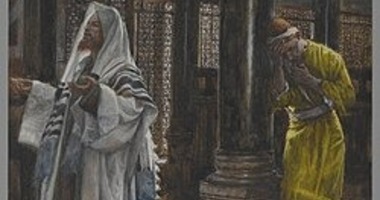
The Pharisee in Luke 18, 9-14, by his own self-appraisal, kept all the rules – from fasting and almsgiving to honesty and purity. But his supposed accomplishments made him blind to his bond with other people and to his need to be connected to God. He went as far as to despise others, while giving thanks (to himself) for his own merits. In the end, he didn’t even pray to God, but to himself. And by these attitudes, he undermined all his other virtues.
Meanwhile, the tax collector in the same parable exercised genuine humility, recognized the essential truth about himself, and made an honest self-appraisal – in God’s presence – with no pretense, masks or falsehoods. “Lord, be merciful” is the prayer of someone who is practicing what is called “true religion.” According to Jesus, the tax collector went home with his sins forgiven and with relief in his heart. How will we go home from church today? How will we live this week?
***
Según San Lucas (18, 9-14), Jesús dirige la parábola del fariseo y el publicano a algunos que presumen de ser justos ante Dios y desprecian a los demás. Los dos protagonistas que suben al templo a orar representan dos actitudes religiosas contrapuestas e irreconciliables. Pero, según Jesús, ¿cuál es la postura justa y acertada ante Dios? Ésta es la pregunta de fondo.
El fariseo es un observante escrupuloso de la ley y un practicante fiel de su religión, pero no sabe lo que es orar. No reconoce la grandeza misteriosa de Dios, ni confiesa su propia pequeñez. Él piensa que no necesita a Dios, no le pide nada, se basta a sí mismo.
La oración del publicano es muy diferente.. Reconoce que es pecador. Sus golpes de pecho y las pocas palabras que susurra lo dicen todo: “¡Oh Dios! Ten compasión de este pecador.” No tiene nada que ofrecer a Dios, pero sí mucho que recibir de Él: su perdón y su misericordia. En su oración hay autenticidad – está en el camino de la verdad.
Los dos suben al templo a orar, pero cada uno lleva en su corazón su imagen de Dios y su modo de relacionarse con Él. El fariseo sigue enredado en una religión legalista: para él lo importante es estar en regla con Dios y ser más observante que nadie. El recaudador, por el contrario, se abre al Dios del Amor que predica Jesús: ha aprendido a vivir del perdón, sin vanagloriarse de nada y sin condenar a nadie. ¿Cuál entre ellos vamos a imitar hoy y durante la semana que viene?