
January 2: Identity / Identidad
-
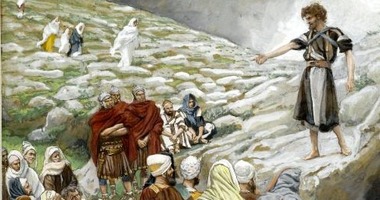
The question put to St. John the Baptist in John 1, 19-28 (“Who are you, then?”) is one of the most challenging of all questions to answer. We can struggle to answer honestly or fully, “Who are we, really?” It is easy to reply at a certain level by telling people where we were born or what work we do or what role we play in our family. But those answers, while true, do not get us very far beyond the externals. Who we are in our inmost core is much more difficult.
For people of faith, like us, the answer to the deeper question has to be influenced by our relationship with Jesus, because that relationship affects us at our very core. St. Paul, for example, can serve as a great model for us, given his appreciation for being immersed into the Christ-life. If asked, “Who are you, then?” he might answer in the words he wrote to the Galatians, “It is no longer I who live but Christ who lives in me.” His identity had become a “Christ-stamped” identity.
Some homework for the coming weekend: When St. John the Baptist was asked that key question, he called himself “a voice that cries out in the wilderness.” His identity was clearly shaped by his relationship with Jesus and he knew his voice needed to lead others to Him. Is our identity shaped in the same way? How can we use this new year to make sure it is?
***
Como San Juan el Bautista (en Evangelio de San Juan 1, 19-28), nosotros, y con nosotros toda la Iglesia, tenemos que afirmar rotundamente que no somos el Cristo, aunque Él está en medio de nosotros, pero que tenemos que ser su voz, sobre todo por la forma cómo vivimos. Nuestras vidas tienen que apuntarle y señalarle a Él.
¡Ojalá pudiéramos ser voces y signos de Cristo de mayor calidad! Nuestro apremiante deseo en el nuevo año es que nosotros mismos, y todo el mundo, le conozcamos mejor.