
January 11: The Day of the Lord / El Día del Señor
-
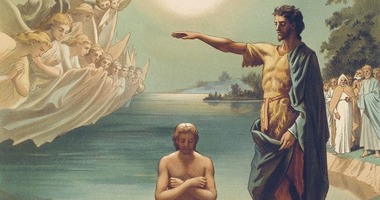
On the Feast of the Baptism of the Lord, we find Jesus (in Matthew 3,13-17) among a crowd of penitents. St. John’s was a “baptism of repentance’ (not what we Christians call Baptism). In the Baptist's case, people were moved by his preaching to change their ways, so they went out to the river to be “baptized” by him. The word “baptism” means “being plunged” or “immersed.” The penitents at the Jordan were “plunged” in the river as a sign of cleansing. It was a symbolic expression of their need to be finished with their old ways and turn over a new leaf. So, what’s up with Jesus of Nazareth lining up with sinners who want to change their ways?
Jesus’ presence there and His willingness to enter into the waters express everything that He is going to be as His public ministry unfolds. He will show complete solidarity with sinners. He will sit and eat with them. He will share His life with them. He will defend them against heartless religious authorities who would call them unclean and cast them out. As He lived among them, he would die among them, crucified as an evil-doer. All of this was done to reconcile us to one another and to the Father.
***
Food for thought for the coming week: Water is a way we clean ourselves. St. John’s baptism was a kind of “self-improvement.” Jesus would put it on a different footing and, in fact, raise it up and create something new out of it. “I baptize with water,” said St. John, “He will Baptize you with the Holy Spirit and fire.” This is the only real way of transformation. After all, left to ourselves, we just rearrange ourselves to look better. Only the Holy Spirit can truly change us – and has changed us.
***
Oímos hoy en el Evangelio de la Fiesta del Bautismo del Señor: “Al salir Jesús del agua, una vez bautizado, se le abrieron los cielos y vio al Espíritu de Dios, que descendía sobre Él en forma de paloma y oyó una voz que decía desde el cielo: ‘Éste es mi Hijo muy amado, en quien tengo mis complacencias.’” Mateo 3, 17
La voz que se escucha en el cielo es muy importante para la comunidad de San Mateo. En los últimos tiempos, el pueblo de Israel creía que el cielo se había cerrado por completo. Pensaban que Dios estaba enfadado con ellos. El profeta Isaías lo había señalado en su obra: “No te irrites tanto, Señor, no recuerdes siempre nuestra culpa: mira que somos tu pueblo… ¡Ojalá rasgases el cielo y bajases!” (Isaías 64, 7-8 y 63, 19). Estimaban que Dios se había olvidado de ellos, pecadores. Colocando esa voz que baja del cielo, San Mateo da a sus oyentes una buena nueva: el Padre ha escuchado la súplica de su pueblo, la puerta del cielo se ha abierto de par en par y ya no la cerrará más. Se ha acabado la enemistad entre el cielo y la tierra. Jesús es la llave que nos da acceso al Reino.
Con esta Fiesta, la Iglesia nos quiere recordar que Jesús recibe la bendición de Dios Padre y es enviado a predicar la presencia y el poder de Dios que irrumpe en la historia de la humanidad. Hoy (y diariamente) nosotros tenemos la oportunidad de renovar las promesas que hicimos el día de nuestro Bautismo y que debemos vivir en nuestra vida diaria. Celebremos nuestro bautismo y celebremos a nuestro Dios.