
August 30: Preparing to Celebrate Sunday’s Mass
-
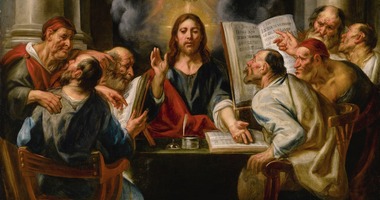
This weekend’s Gospel (Luke 14, 1 and 7-14) will include Jesus’ acceptance of an invitation to dine at the home of a leading Pharisee. To enter into this account, we could go back to the tables where we learned to pray, to the tables in the homes we grew up in. Do you remember the family members around those tables and the occasional surprise guest or guests? Do you remember the conversations? Sadly, such tables today are too few … with fast-food meals eaten in the car on the way to or from some meeting or practice or game. Too few are the meals where people sit together and talk – without the television on, without texting, or without video games for children to keep them quiet.
With fewer and fewer “family meals” around a common table, are we losing our appreciation for what it means to be a guest or to have guests? Are we losing our appreciation for how to host others graciously?
Dining together with family and friends is really all about gratitude. It is also about the right attitude regarding the abundance we have been given and how we can share it. This is what Jesus revealed at that dinner in the house of a leading Pharisee and it is what He reveals to us at every celebration of the Mass: our hearts’ desire to give gratitude to God – the giver of all gifts and the source of the abundance of blessings we share.
***
Parece lo más natural desear tener un buen puesto en la sociedad. A menudo los estudios (o la experiencia práctica en el trabajo) se eligen pensando en los resultados económicos, que uno va a obtener después con el ejercicio de tal profesión. Pocas veces se tiene en cuenta la verdadera utilidad social y la propia vocación. Todos queremos que los demás nos vean como personas triunfadoras.
Jesús, en el Evangelio del domingo, recomienda buscar siempre el último puesto (Lucas 14, 1.7-14). La verdad es que los últimos puestos solían estar siempre libres. Si Jesús recomienda el último puesto es porque Él mismo ha querido ocuparlo y situarse entre los últimos. Siendo Dios podía haber elegido una vida sin problemas, naciendo en un país rico en una familia que tuviera todo resuelto. Pero de esa manera su vida tan sólo hubiera sido atractiva para una élite rica, intelectual o aristocrática, que se habría identificado con sus ideales. Escogiendo vivir como uno de tantos millones, ha podido convertirse en el Hermano de todos, sobre todo de los pobres y de los que no cuentan a los ojos del mundo.
Antes de participar del Banquete de la Eucaristía el domingo, reflexionemos sobre lo que el Señor nos dice y que es condición para el Banquete de su Reino: “Todo el que se ensalza será humillado, y el que se humilla será ensalzado.”